Olio app review: The food sharing platform that saves you money
Money Talk is intended to inform and educate; it's not financial advice. Affiliate links, including from Amazon, are used to help fund the site. If you make a purchase via a link marked with an *, Money Talk might receive a commission at no cost to you. Find out more here.
With over nine million users across more than 60 different countries, the Olio app is a hugely popular platform for people to share stuff with their local community.
It’s known as a food sharing app as volunteers can distribute food collected from supermarkets and other businesses via the platform, but people also use it to give away or sell stuff they no longer need.
I first heard about it way back in 2022 but didn’t start using it until last year when I was planning this Olio app review as a follow on from my Too Good To Go review.
But now I love it and use it every week – and it’s saved me a lot of money and helped me to squeeze in some extra exercise.
So here’s everything you need to know whether you want to use it to request food or to be a volunteer and reduce food waste.
What is the Olio app and how does it work?
The Olio app was first launched in London in 2015 and has since spread to cities in more than 60 different countries.
The premise is simple: you can use the platform to share stuff you no longer need with your local community and request items from other people.
A big part of Olio’s business comes from volunteers sharing surplus food donated by supermarkets such as Tesco, Sainsbury’s and Waitrose (more below).
But as individual users, you can also use it to sell or give away stuff you no longer need.
I recently gave away a big stack of more than 20 notebooks I’d accumulated over the years and have previously given away water bottles and other stuff.
What makes Olio different from a selling platform like eBay or Vinted is that the requester has to come and collect the item themselves – there is no delivery or postage.
Is Olio free to use?
Olio is completely free to use.
Obviously if you buy stuff on the platform, you’d have to pay for those things, but Olio doesn’t charge an additional fee on any sales.
To make all this possible, the app is funded through three main ways.
Payment from its food service partners
Supermarkets, restaurants and caterers all use Olio to distribute their surplus food.
It can be stuff that’s close to its expiry date (or just past it in the case of “best before” items), or items that are surplus to requirements.
All of the food is perfectly safe to eat but if unsold – and not collected by volunteers and shared – it would end up in the bin and become food waste.
For these companies, the service that Olio’s volunteers provide is essentially that of waste disposal (it doesn’t sound glamorous, I know) so they pay Olio for every collection.
Income from advertising
In recent years, Olio has introduced an increasing number of ads to its app, which helps to fund its operations.
Most users just see it on the app interface, and it isn’t intrusive, but sometimes video ads will interrupt users when they try to request items.
This, as far as I can tell, only happens when someone is a heavy requester.
Donations from users
This leads me to my next point: there’s also a premium version of the app that you can pay for.
This gives you a couple of extra features but it also lets you avoid those pesky ads.
Many people also upgrade their membership just to support Olio’s work in fighting food waste.
What kind of food can you get on Olio?
One reason why Olio is so popular is because you can get a lot of free food from it.
Enough free food, in fact, you can probably stop doing your weekly shop. During a cost of living crisis, that can only be a good thing.
But there’s a key limitation.
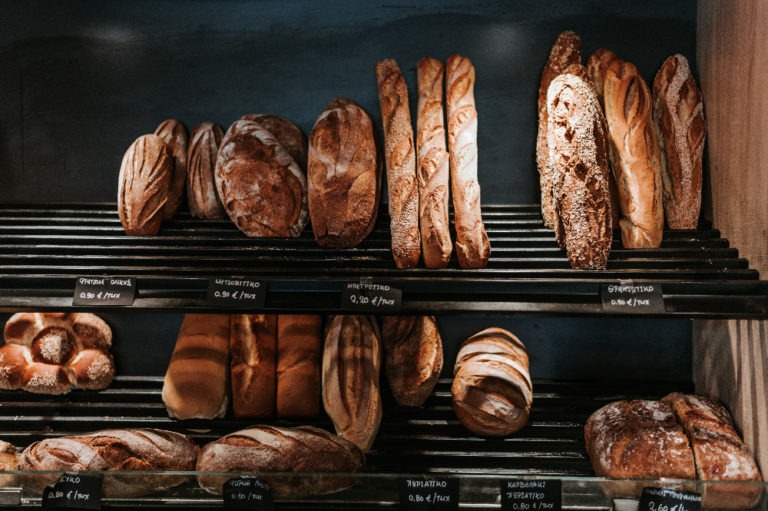
While you might occasionally find fruits, vegetables, and meats, you’re much more likely to find bread, baked goods, sandwiches and ready meals, which doesn’t exactly provide a balanced diet.
In terms of retail partners, Olio works with a lot of different businesses but availability can depend on where you’re located in the country.
The food can come from:
- Supermarkets, including Tesco, Sainsbury’s, Waitrose, Asda, Iceland and Lidl
- Coffee shops, restaurants and hotels, including Starbucks and Pret
- Caterers, including ones for businesses, hospitals, schools and even film sets
How to use Olio
Getting started with Olio is pretty straightforward – just download the app, register, create your profile and you’re ready to go.
As a requester, you don’t need to do anything more than that to start browsing and requesting items from people close to you.
You can also use it to list your personal items to share for free or to sell.
However, if you want to become an Olio volunteer (Olio calls them Food Waste Heroes) – you’ll need to submit a photo ID and work through the training videos and quizzes before you can start collecting and sharing food.
This ensures you understand food safety restrictions and gives you an idea of what’s involved.
What’s it like to be a requester?
I’ve only requested things from Olio a handful of times.
There are two main reasons. One is that there’s rarely stuff I want on the app, and the second is that most collections are quite late.
Olio’s food service partners tend to share their food between 8.30pm to 11pm, which means by the time the volunteer has collected the items and listed them, it can be even later.
For me it’s only worth it if I’ve been travelling, or if I’m about to go travelling, and I don’t have the time or the energy to cook.
I’ll always look for places close to me and in areas that I’m familiar with for safety reasons.
Often non-food items can be collected during the day, which can be helpful.
For example, I recently collected a vase with fake flowers that I really liked.
You won’t always get assigned everything you request but you can improve your chances by being polite and being clear about when you can collect and how many items you want if there are multiple items.
And because users get to rate each other after a collection, it becomes obvious pretty quickly if someone is horrible to deal with.
What’s it like to be a volunteer?
The first time I did a collection as a volunteer, I was shocked by how much food I was given.
We’re talking half a dozen loaves of bread plus freshly baked goods and chilled food on top of that.
It’s more than I’d buy in a weekly shop and it’s all food that would otherwise have gone to waste.
That’s just a collection from a corner shop-sized store – the bigger ones will most definitely require the use of a trolley if not your car.
Food waste is an issue that genuinely concerns me and it’s one reason why I’ve continued to be a volunteer.
The other is that it’s totally flexible.
Unlike many charities that require you to commit to a volunteer position like it’s a part time job, Olio lets you skip collections when you need to.
You can also do one off collections if you’re not sure you can commit to a regular one – and that’s how I started.
As a volunteer, you get to keep 10% of what you collect and must list the other 90%.
I love getting to walk a bit more so I do a couple of collections a week and often I don’t keep anything at all.
And I still do my own food shop because, like I said, it’s hard to stick to a balanced diet if you’re only eating surplus food.
When I first started, very few people collected from me so I’d always end up with a lot of leftover food.
A lot of it did end up in the bin because not everything could be frozen or was stuff I would eat – and that’s obviously an issue if you have bin restrictions.
After a couple of months, I started getting regular collectors and most times everything goes the night I collect or the morning after.
The other thing to think about is safety.
My collection isn’t very late so I don’t need to worry about walking home in the dark.
However, I will always meet requesters in a public place rather than have them come to my home.
Most requesters are lovely – and some have even offered to make me food from items they’ve collected – but there have definitely been a couple of times where people have made me feel uncomfortable.
There aren’t many ways Olio can help here but you can block the user from future contact. Again, this is where it’s helpful if they don’t know where you live.
Is food from Olio safe to eat?
The main concern for many people will be whether the food you collect from another user is safe to eat.
I think it’s a complicated issue and the decision ultimately rests with you.
The food shared by Olio’s partners is supposed to be safe to eat but like any retail business, there might be issues that might hamper the quality of the food.
That might be things like storage issues or handling.
When collecting from a volunteer, you’re also trusting that they’ve done the food hygiene and safety training and are adhering to all the rules.
And yes, there are times when volunteers are obviously not following food safety regulations.
I personally would only collect lower risk items, like pre-packaged food, fresh fruit and vegetables, and things that won’t easily go off.
Is Olio worth using?
Olio is definitely worth using if you have an active community around you.
It can help reduce your food spend and cut down on food waste.
That said, I think it works best in a big city like London where there are a lot of volunteers and requesters, as well as food businesses partnering with Olio.
In more rural locations you might only have one or two options, which might not be worth the time and effort.
Pin this for later